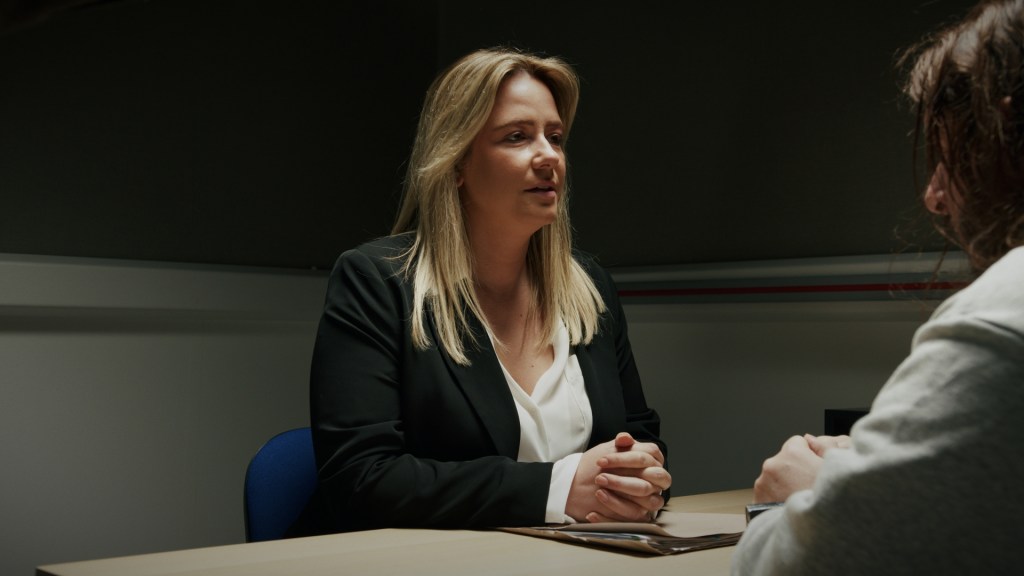
Project Description.
Any Last Words is a single-location psychological thriller adapted from the stage play by Velton J. Lishe and Jay Anthony. Through the lens of a fractured mind, the film slowly reveals its story, using split personality to blur reality and expose the truth lurking beneath the surface
As Director of Photography and Editor, I was responsible for shaping the film’s visual language, designing the look and feel of the single-location setting, and crafting the final narrative through the edit.
Pre-Production
In pre-production for Any Last Words, the primary creative challenge was designing a visually engaging approach to a single-location, dialogue-driven scene. Rather than viewing this limitation as restrictive, I treated it as an opportunity to simplify technical concerns and focus on visual storytelling. With no need to account for extensive camera movement or lighting changes, my attention shifted toward precise framing, shot variation, and character transitions to sustain tension and audience engagement.
I began by closely analysing the script, breaking it down shot by shot by physically lining a printed copy to identify visual beats and psychological shifts within the scene. From there, I built a detailed shot list and conducted extensive visual research using ShotDeck, sourcing references that aligned with the tone and narrative intent of each moment. These references were then directly mapped to the shot list, ensuring a deliberate and varied visual approach throughout. This research-led process was crucial in maintaining visual diversity within a confined space, allowing the cinematography to subtly support the film’s psychological themes while keeping the single location visually dynamic
After I worked closely with the director Velton J Liske to make sure all of this aligned with his vision for the film and bring it all together.
Principal Photography
During prep, we considered renting an alternative camera system—ideally a full-frame body with internal RAW recording and a more riggable form factor. However, due to budget constraints and my familiarity with the system, I ultimately chose to shoot on my own Blackmagic Pocket Cinema Camera 6K Pro. This decision allowed for a faster, more confident workflow on set while still delivering the image quality required for a cinematic finish.
I paired the camera with a set of IronGlass rehoused vintage lenses (38mm, 58mm, and 85mm), complemented by a Sigma 18–35mm for wider coverage. I was drawn to the character of the IronGlass lenses—their subtle imperfections and texture added a distinctly cinematic quality that supported the psychological tone of the film. The Sigma lens provided a clean, reliable option for wider shots while maintaining consistency with the overall visual language.
Camera & Lens Choices
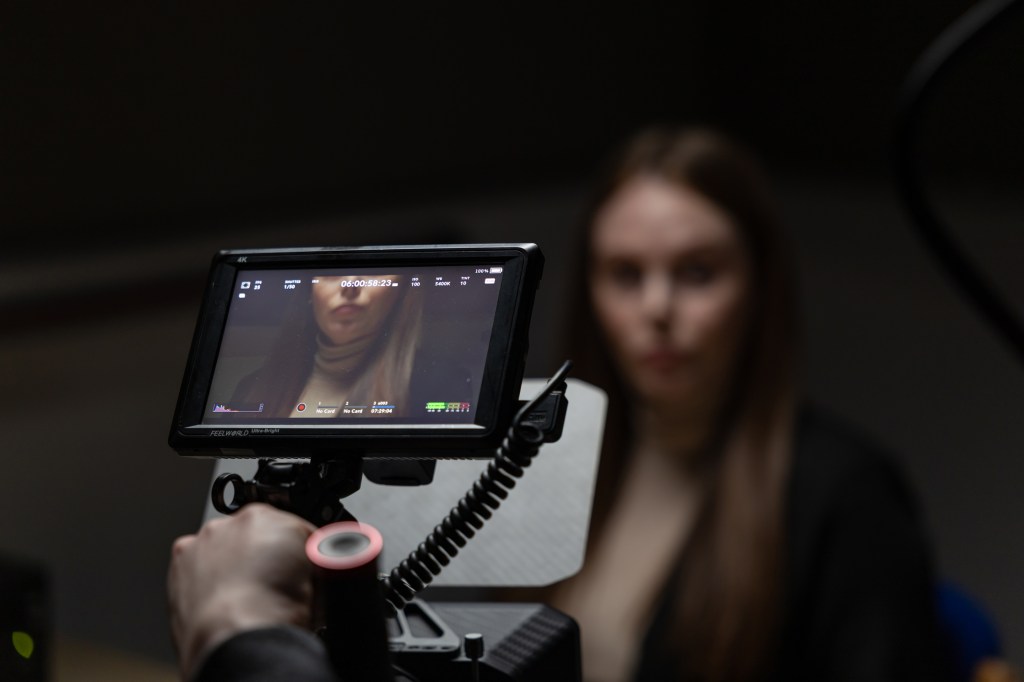
Principal photography took place over two days, with a schedule of four script pages per day. The contained nature of the film allowed us to work efficiently while still giving performances and camera setups the time they needed. This structure reinforced the importance of strong coverage and intentional shot variation within a single location.
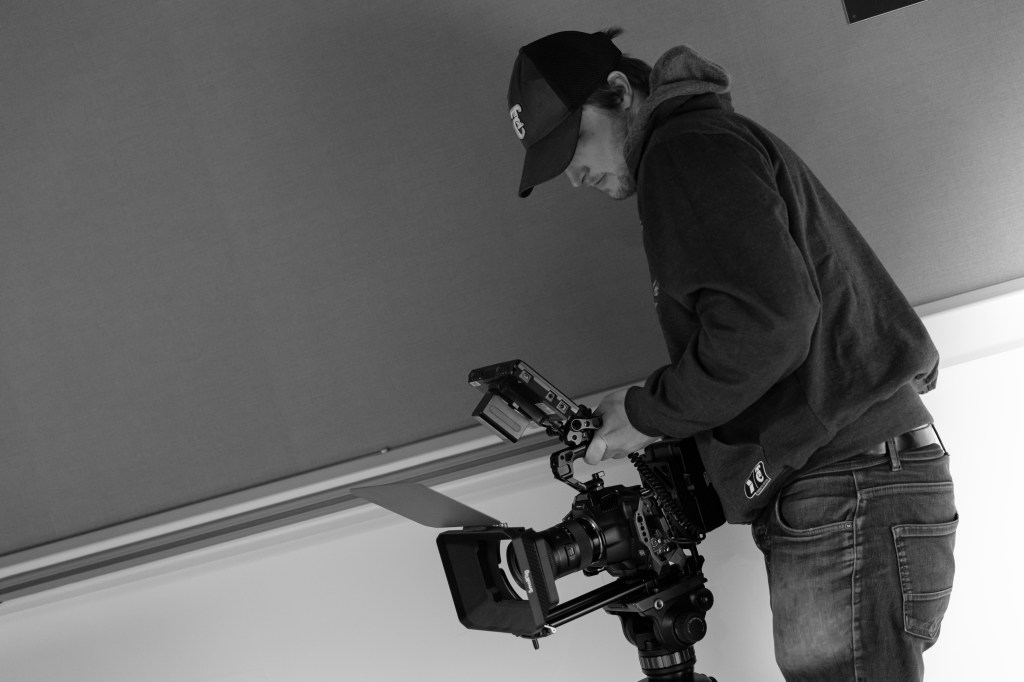
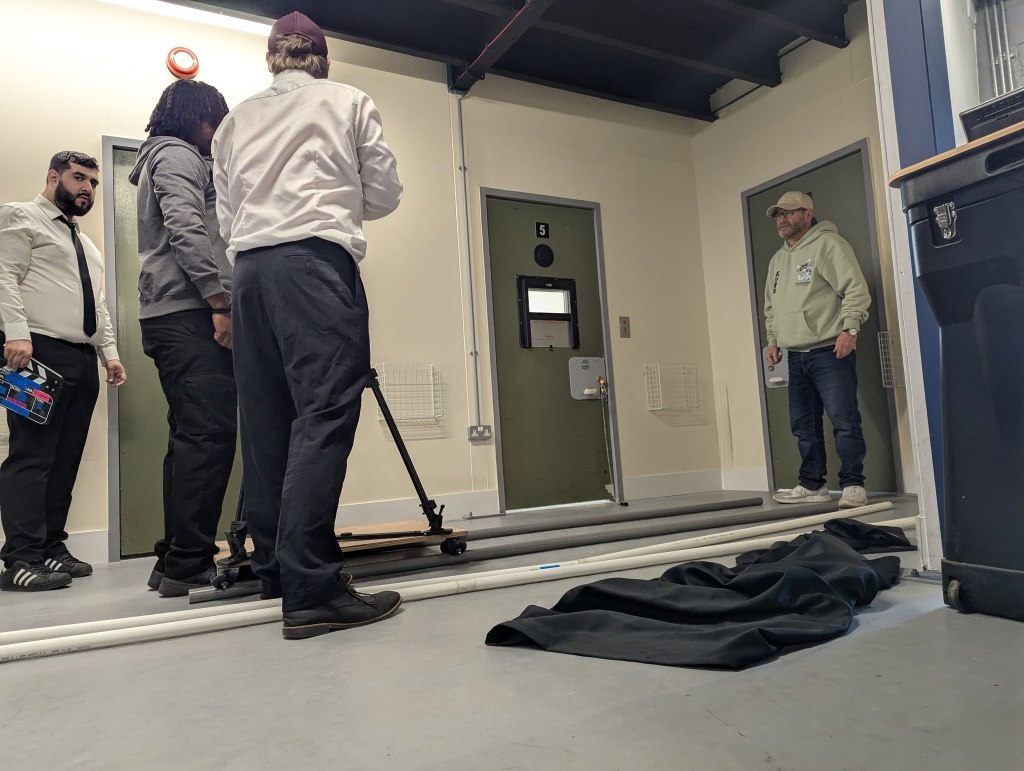
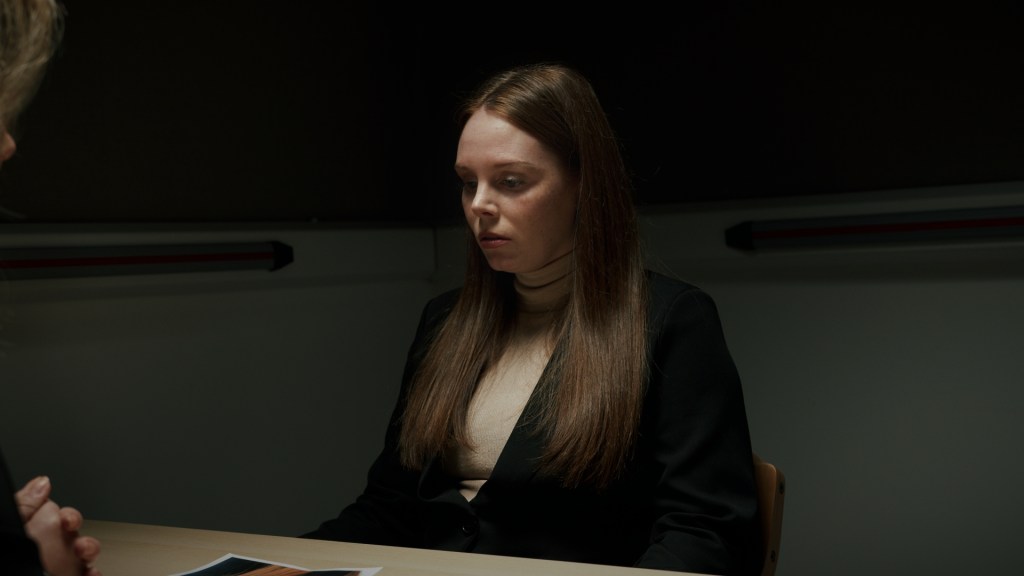
We shot at PoliceLot, which served as the prison location for the film. The facility provided fully dressed sets for both the interrogation room and the prison cell, offering a high level of realism while also giving us complete control over the environment. Having access to studio-style amenities—including a green room and catering—created a highly efficient and focused shooting experience. This project reinforced my interest in working with controlled studio sets, where lighting and camera placement can be refined without external limitations.
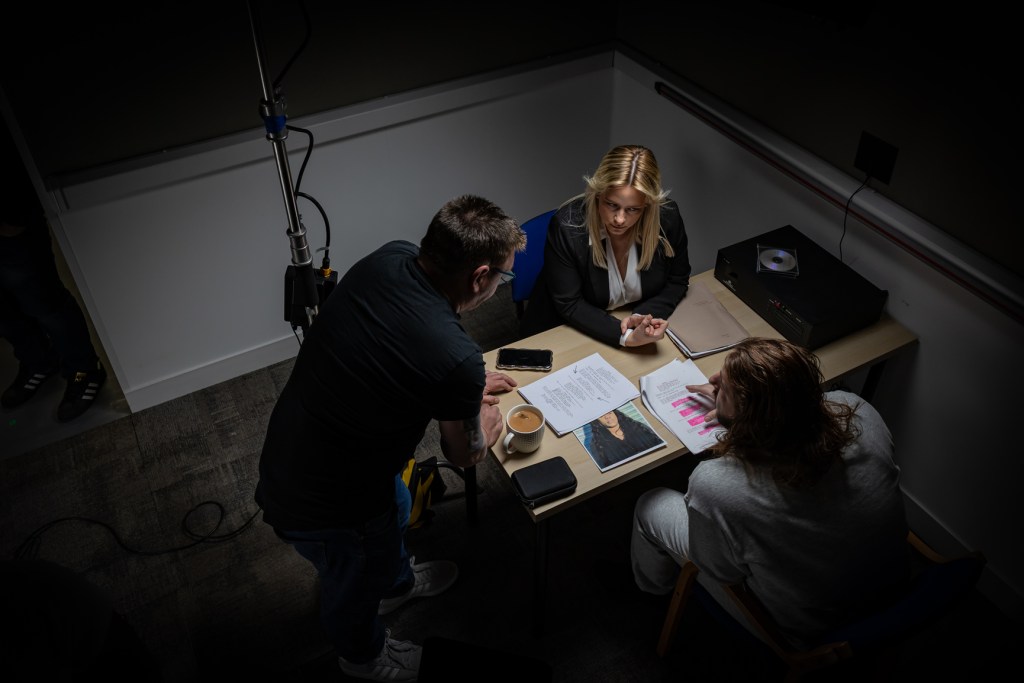
Alongside my own camera and lighting equipment, I built a makeshift dolly specifically for the project to achieve the opening dolly shot. This practical solution allowed us to introduce movement into an otherwise static environment, helping establish tone and draw the audience into the psychological space of the film from the outset.
I aimed to shoot at the lowest ISO possible—often ISO 100—to preserve detail in the shadows and maintain a rich, controlled image. Given the dark, high-contrast nature of the scenes, this approach was essential in protecting image integrity during post-production.
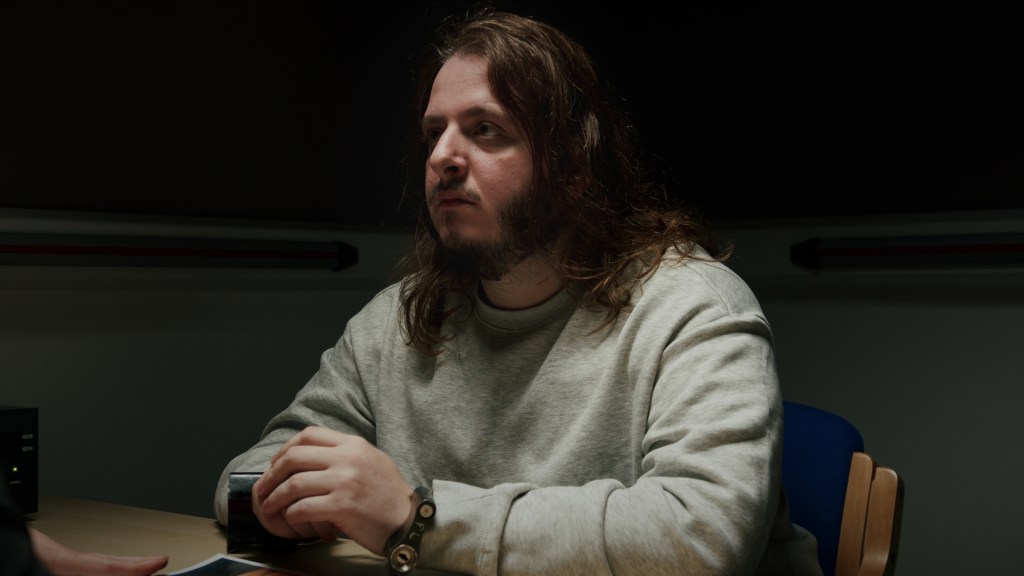
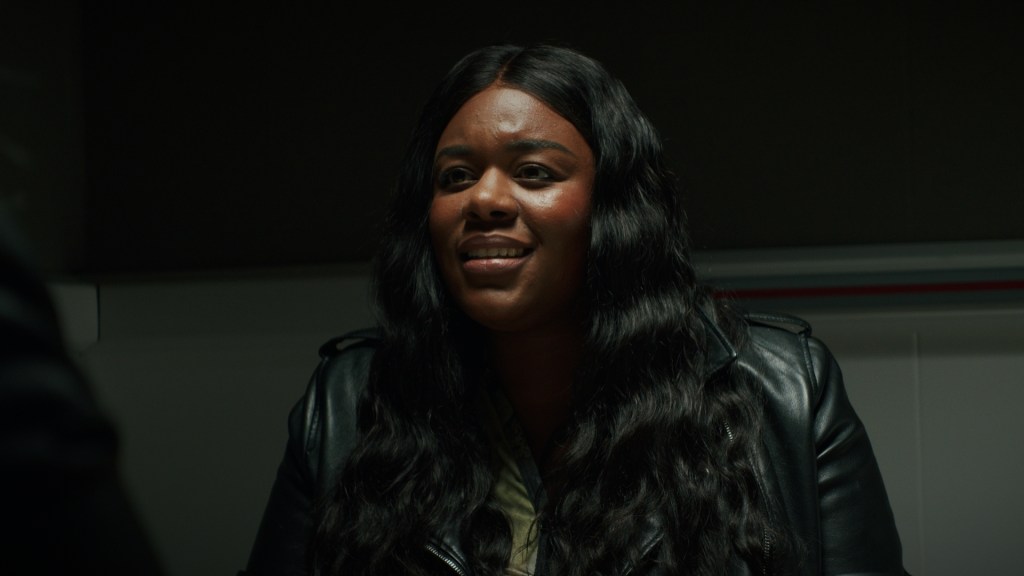
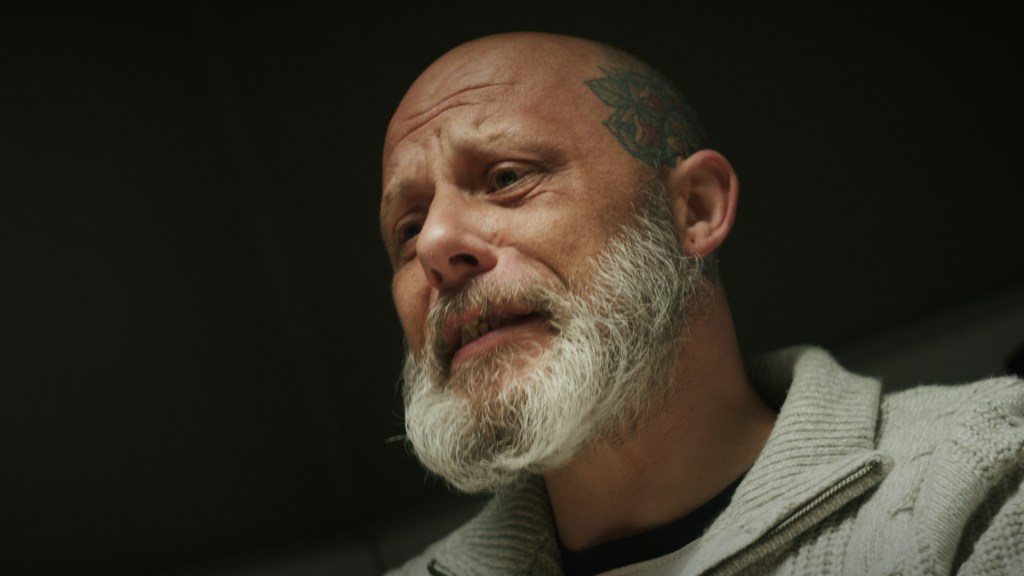
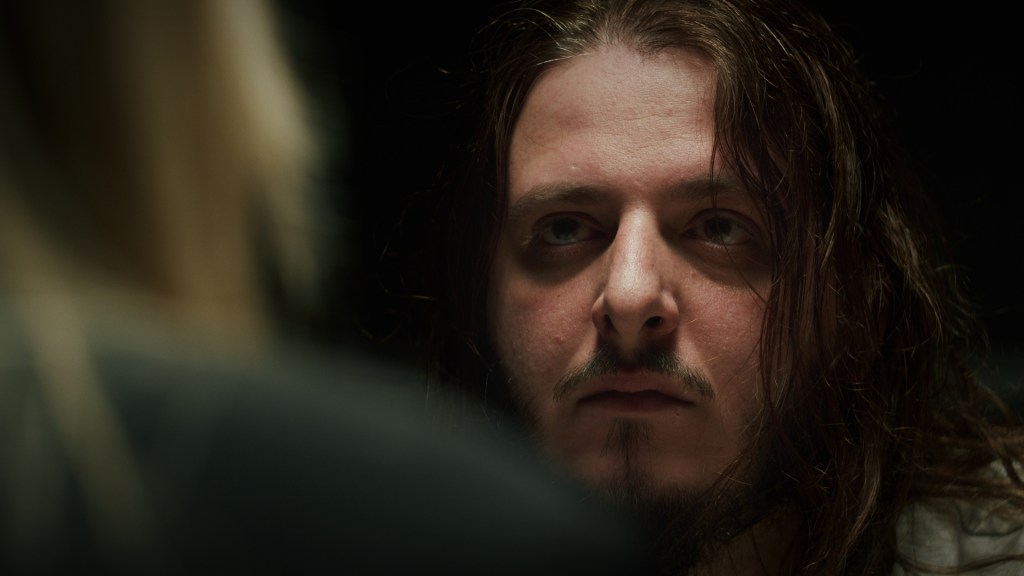
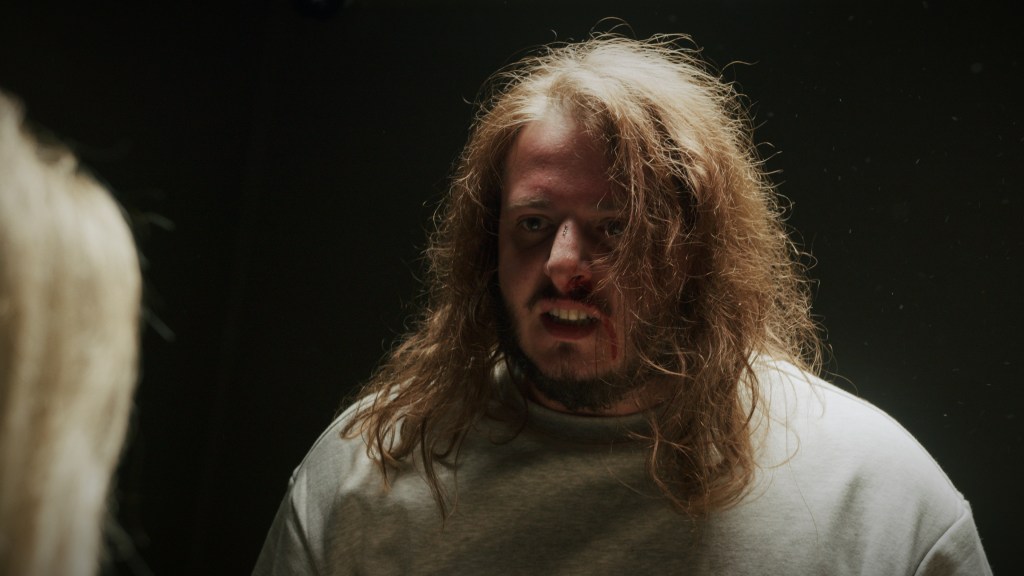
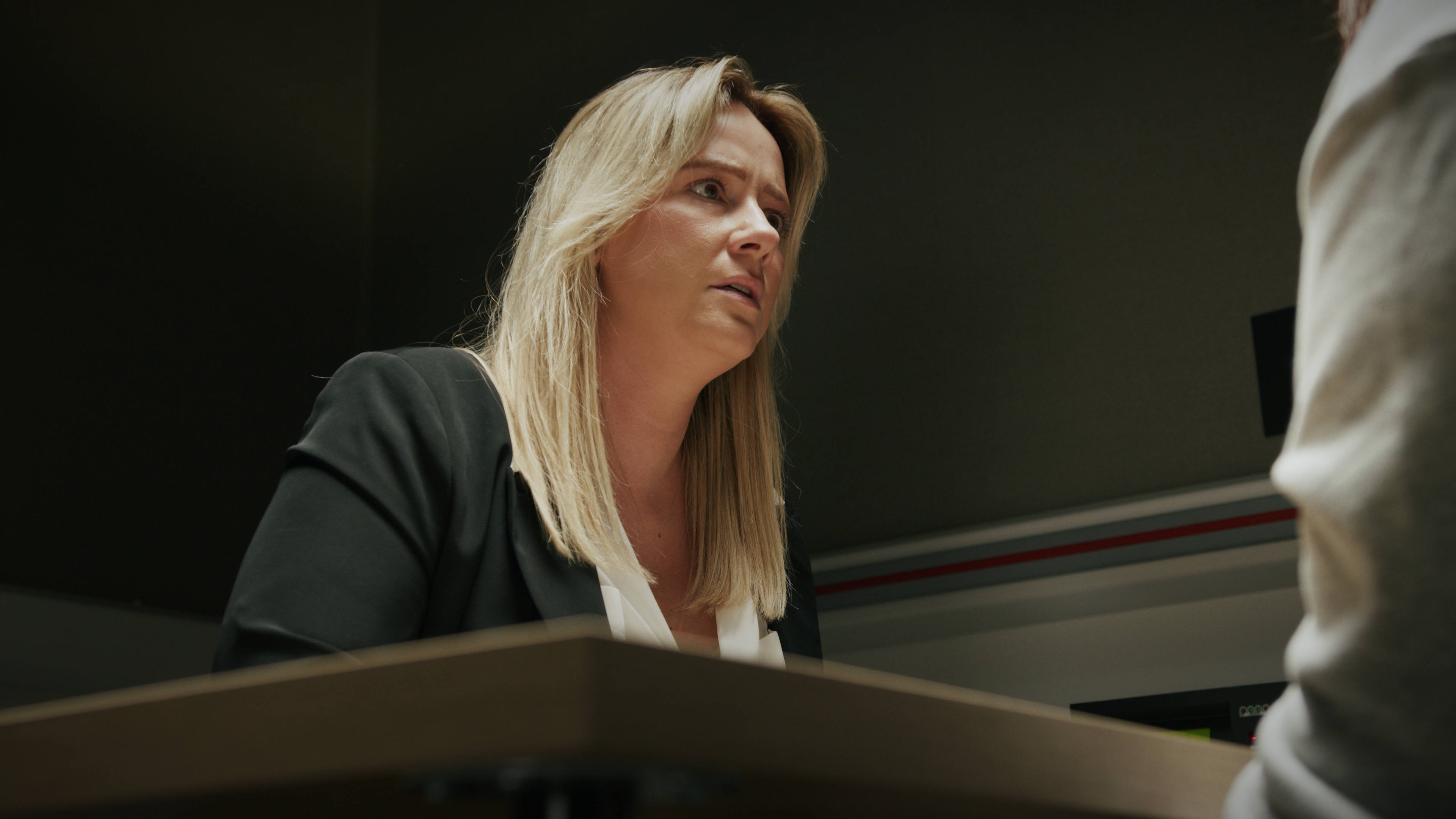
The lighting plan centred around a single Aputure Amaran 200x, used primarily as a top light. This created a stark, dramatic look appropriate for the interrogation setting while also freeing up physical space on set for performance and camera operation. The simplicity of the lighting setup supported the film’s tone and reinforced the oppressive atmosphere of the location
Post-Production
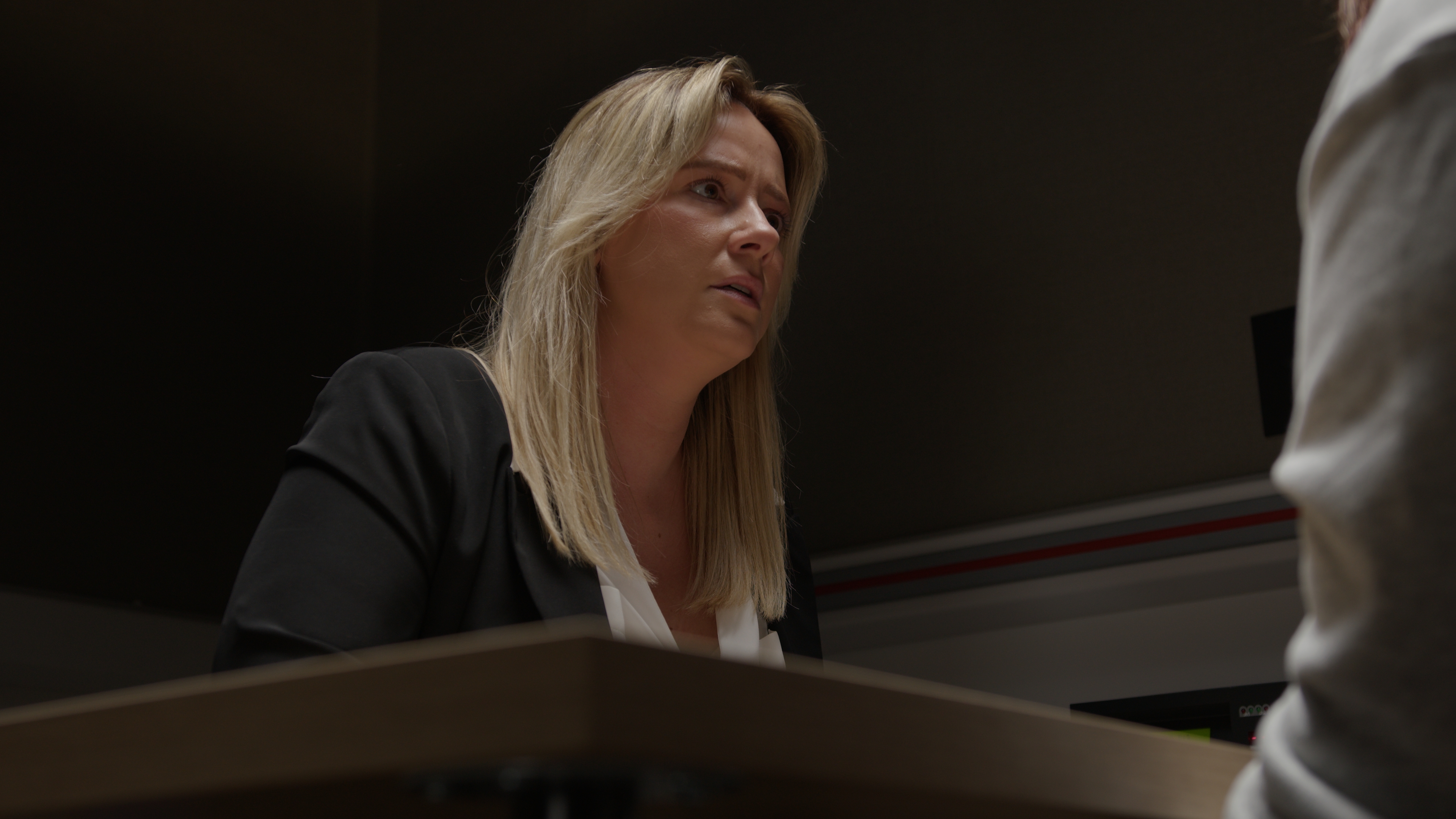
Post-production on Any Last Words was completed in DaVinci Resolve, with the edit built chronologically to preserve performance continuity and narrative tension. Much of the film’s structure had been carefully planned during pre-production, meaning many of the cuts and transitions were already defined before the edit began. As a result, the editing process became one of precise assembly—placing scenes where they were intended to land and refining rhythm rather than reinventing the structure.
Sound design was developed in parallel with the edit, using stock music and sound effects sourced from Artlist.io to establish atmosphere and psychological intensity from an early stage. Working with sound in place allowed pacing and transitions to be shaped holistically, while post-production focused on problem-solving, tightening performances, and ensuring the final cut fully realised the film’s intended tone.
Colour Grading
The colour grade for Any Last Words was completed in DaVinci Resolve and developed alongside the edit, allowing the look of the film to evolve in parallel with its pacing and tone. The grade features a subtle offset toward green, reinforcing the unease and psychological tension of the story. A Buttery LUT for Blackmagic Gen 5 was used as a base, providing a soft, natural foundation, while Resolve’s Film Look Creator was applied to introduce a gentle filmic texture. Together, these choices created a restrained, cinematic look that supports the mood of the film without drawing attention away from performance.
 Tom Spruce
Leave a comment